


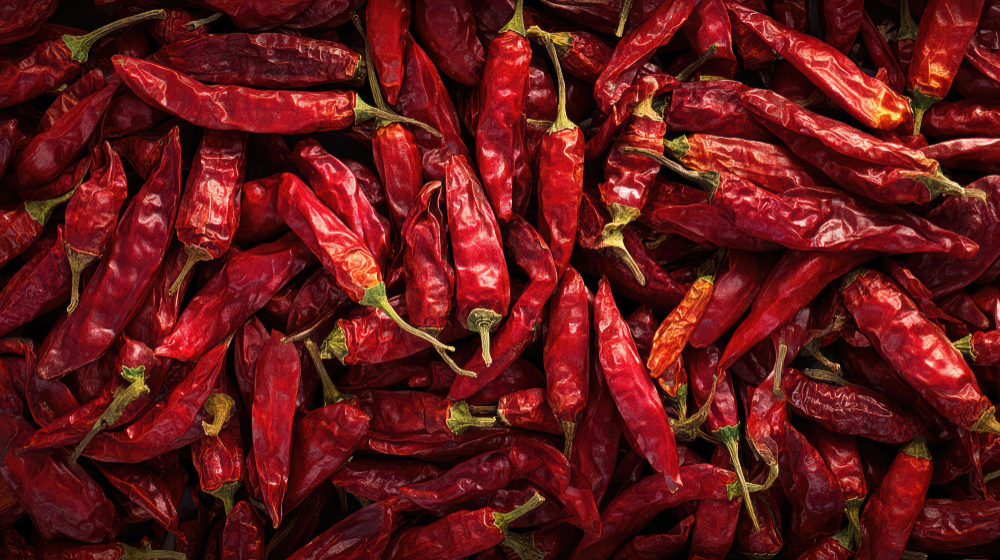
A chilli that does well in a snack seasoning can fall flat in a pickle, and the one that gives a sauce its colour may add little to a spice blend. Indian dry chillies differ in heat, colour, flavour and form, and every application leans on those traits differently. This guide takes four common uses in turn, says which chilli types buyers usually reach for, and points out what to check before you commit.
Why the Application Decides the Choice
No single Indian chilli is best across all four. Teja S17 and Guntur Sannam are associated with strong heat. Byadgi and Kashmiri-type chillies are associated with deep or bright red colour and milder heat. Wonder Hot and similar types sit somewhere in between.
Those are starting points, not specifications. Heat and colour shift with crop, growing area, grade and supplier, so the real decision rests on lot-level test data and trials in your own product.
Chillies for Sauces
Hot Sauces and Chilli Pastes
When heat is the selling point, a high-pungency type like Teja S17 is the usual base. Many producers add a colour-led chilli as well, because a hot chilli on its own can turn dull or brownish once it's cooked and stored.
Table and Cooking Sauces
Mass-market sauces need a controlled, repeatable heat and a stable red. The usual answer is a milder, high-colour chilli for the red and a smaller share of a hot variety to reach the heat target.
Marinades, Pastes and Cooking Bases
These mix chilli with oil, vinegar, ginger, garlic and salt, and the chilli is judged mostly on the colour it gives the base and the heat the finished dish delivers. A colour-led chilli handles the first job well, and a little hot chilli is often enough for the second.
Processing Points
Cooking, pasteurisation and hot filling can darken or dull chilli colour, so run your trial through the actual heat treatment, not just a bench mix. Powder disperses easily; whole or crushed chilli needs time to hydrate and may need milling in the process. Let your equipment decide the form.
Chillies for Seasonings
Seasonings for snacks, noodles and coatings get judged in seconds: how the colour looks on the product, how the powder flows from the tumbler, how fast the heat arrives. Fine powder gives even coverage and quick heat. Coarser flakes give visible specks and a slower build.
Colour is usually the harder target. A seasoning that looks pale on a fried snack can lose sales no matter how it tastes, so a colour-led chilli often forms part of the blend. Moisture and particle size matter too, since both affect clumping, flow and shelf life.
Heat Profile
Heat doesn't reach the palate the same way in every format. If you want it to hit immediately or to build gradually, say so when you brief a supplier, and trial more than one particle size.
Chillies for Pickles
Pickles are the toughest test. The chilli sits in oil, salt and often acid for months, and both its colour and its heat change along the way.
Chilli pigments are largely oil-soluble, which is why a pickle's oil turns red as well as the pieces. That makes colour-led types like Byadgi and Kashmiri-type a frequent choice. Heat can come from a separate hot chilli, so the pickle doesn't depend on one variety for both jobs.
Most pickle makers use chilli powder in the masala mix, and some add whole or split dried chillies as well. Clean raw material matters more here than in many other uses, because stalk fragments and foreign matter are easy to spot in clear oil. Ask how the chilli is cleaned and sorted before grinding.
And always judge pickle chilli on stored samples. A jar that looks right on packing day can look different a few weeks later, and the chilli grade may be why.
Chillies for Spice Blends
Blends and masalas sit between the other categories. They need heat, colour and flavour, but chilli is one ingredient among many, so consistency counts for more than any single trait. The chilli should also sit comfortably beside cumin, coriander, turmeric and the rest instead of drowning them, which is a good reason to trial full blends and not chilli alone.
The usual approach is two chillies, one for colour and one for heat, kept as separate specifications. When a new crop arrives, a blender can correct the batch by changing the ratio instead of replacing the whole chilli component.
Application Summary
Treat the table as a quick guide. Your own product and process may point somewhere else entirely.
| Application | Main Priority | Commonly Used Chilli Types | Watch For |
| Hot sauces | Heat | Teja S17, Guntur Sannam | Dull colour after cooking |
| Cooking sauces | Colour and steady heat | Byadgi or Kashmiri-type, plus a hot variety | Heat variation between lots |
| Seasonings | Colour and flow | Colour-led chilli, fine powder | Moisture, caking, particle size |
| Pickles | Colour stability | Byadgi, Kashmiri-type, plus a hot variety | Colour change during ageing |
| Spice blends | Consistency | Two-chilli combinations | Crop-to-crop variation |
Common Sourcing Mistakes
The same errors keep showing up. Buyers choose on price per kilo without looking at colour or heat data. They approve a variety from one sample and assume later lots will match. They write a single combined spec for heat and colour, which hides which of the two has drifted. And they skip shelf-life trials for products that sit on shelves for months.
None of these is hard to avoid. Each comes down to asking for lot-level data and testing the chilli where it will actually be used.
What to Check Before You Buy
Ask for pungency and ASTA colour results on the actual lot, plus moisture and foreign-matter figures. Then test the chilli in the finished product. A lab number tells you what the chilli is; a trial tells you what it does.
For long-life products like pickles and sauces, run a stored-sample comparison against your approved reference. If the chilli only passes on the day of manufacture, the specification is incomplete.
Bulk Buying Considerations
Batch Consistency
Agree tolerance ranges instead of fixed figures and keep a retained sample from every shipment. If a lot falls outside range, a documented reference makes the conversation with the supplier a lot simpler.
Documentation and Food Safety
Ask for lot-specific testing on contaminants relevant to your market, such as aflatoxin and pesticide residues, and verify any certifications. Powder buyers should also ask about testing for illegal dyes.
Supplier Fit
A supplier covering several categories can be handy, but ask whether they can hold the same grade across your annual volume. Capacity and consistency matter more than one good sample.
Cost and Performance
Judge cost by what the chilli delivers in the product. A cheaper, paler lot may need more chilli, or added colour, to reach the same finish, and the saving may not survive production.
Timing and Packing
New crop comes once a year, so plan annual volumes around it and ask how long any stock has been stored. Agree packing, labelling and delivery schedules in writing, especially if you need several shipments across the year.
Final Point
Match the chilli to the job: heat-led types where pungency matters most, colour-led types where appearance does, and a combination where a product needs both. Whatever the application, approve each lot on test results and a trial in your own process, never on variety name alone.
FAQs
-
Which chilli gives deep red colour in sauces without too much heat?
Colour-led types like Byadgi and Kashmiri-type are the usual picks, though heat and colour vary by lot. Confirm with ASTA and pungency results before approving.
-
Can I use the same chilli for pickles and seasonings?
Sometimes, but the demands differ. Pickles need colour that holds in oil and acid; seasonings need good flow and quick heat. Trial the chilli in each product separately before committing volume.
-
Does chilli colour fade during a pickle's shelf life?
It can, depending on the chilli, the recipe, light exposure and storage. Compare aged samples against your reference instead of judging colour at packing.
-
Should sauce makers buy whole chilli, flakes or powder?
It depends on your equipment and process. Powder is easiest to dose, while whole or crushed chilli gives you more control over inspection and grind. Test each form in your actual process.
-
How should I trial a chilli before a bulk order?
Get a lot-specific sample, run it through your real process and shelf-life conditions, and compare colour, heat and flavour against your approved reference. Approve the supplier only after the first commercial shipment matches.
