
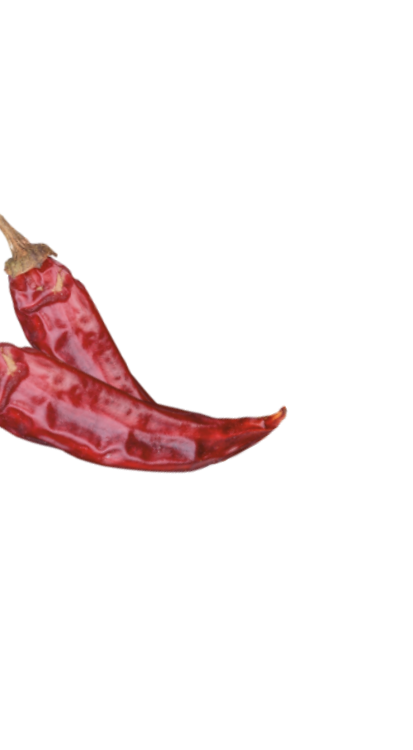
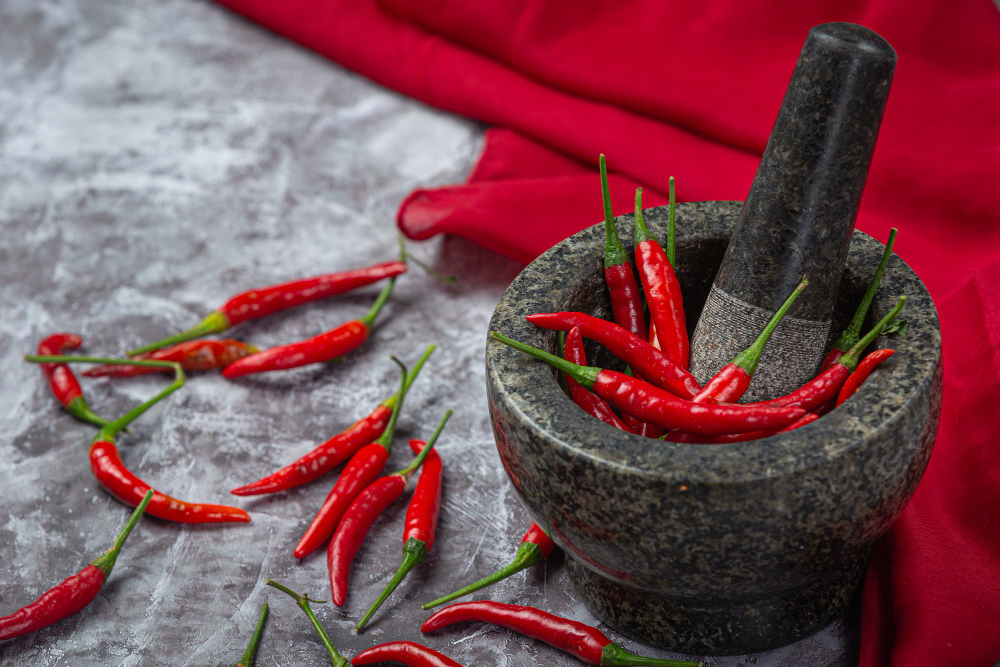
Red chilli is one of the world’s most commonly used spice. Red chilli is famous for its fiery heat, vibrant colour and distinctive flavour and has played an important role in both traditional medicine and culinary traditions for centuries. From ancient healing traditions in Asia and Latin America to today’s food manufacturing and global cuisine, red chilli goes on shaping the way people cook, eat and stay well.
Today, red chilli is grown in a number of countries, with India being the largest producer and exporter globally. Red chilli continues to be an indispensable ingredient in kitchens and food industries all over the world whether fresh, dried, powdered or as sauces and extracts.
This article discusses the medicinal benefits, nutritional value, culinary uses and global significance of red chilli.
Understanding Red Chilli
Red chilli belongs to the Solanaceae family and is a member of the Capsicum genus. It is made from mature chillies that have been dried and processed for culinary or industrial purposes.
The heat in chilli peppers is caused by a naturally occurring compound called capsaicin that is concentrated mainly in the inner membranes surrounding the seeds.
Capsaicin is the ingredient that gives chilli peppers their characteristic spiciness as well as many of their medicinal properties.
Red Chilli Nutritional Value
Red chilli is used in small quantities but it is rich in various nutrients and bioactive compounds.
Red chilli contains:
- Vitamin C
- Vitamin A
- Vitamin B6
- Potassium
- Iron
- Magnesium
- Antioxidants
- Carotenoids
- Capsaicin
Levels of these nutrients may vary based on variety, growing conditions and processing methods.
One of the most significant features of red chilli is its high antioxidant content and this is why it is gaining more and more popularity in health-conscious diets.
Medicinal Importance of Red Chilli
For centuries, chilli peppers have been used in traditional medicine systems for a variety of therapeutic purposes.
Many of these benefits are still being investigated by modern science . Several medicinal properties have attracted considerable scientific attention .
1. Natural Pain Killer
Capsaicin is commonly used in topical creams, patches and ointments to relieve pain.
Studies indicate capsaicin acts by altering pain receptors in the body and reducing the transmission of pain signals.
Capasaicin based products are commonly used for:
- Joint pain
- Body aches
- Sore muscles
- Back pain
- Nerve problems or pain
Capsaicin is used today as an active ingredient in a number of over-the-counter and pharmaceutical pain management products.
2. High in Antioxidants
Red chilli contains powerful antioxidants that can help combat oxidative stress.
These antioxidants may help protect cells from damage by free radicals , unstable molecules associated with ageing and a number of chronic diseases.
Some important antioxidants in red chilli are:
- Beta carotene
- Capsanthin
- Lutein
- Vitamin C
Many chillies have a deep red colour, which is often due to their antioxidant content.
3. Increases Metabolic Activity
Capsaicin has gained a lot of attention for its ability to support metabolism.
Research suggests that capsaicin may increase thermogenesis, a process in which the body generates heat and burns calories, if only for a short period of time.
Chilli itself is not a weight loss solution, but it may help to support healthy lifestyle and dietary strategies when consumed as part of a balanced diet.
4. Promotes Circulation
Chilli has been associated with better blood flow for centuries in traditional systems of medicine.
Capsaicin also can cause a warming sensation which may further improve blood flow and circulation.
Many traditional cultures have used chilli-containing remedies to help warm up in cold weather and to increase overall vitality.
5. Aids Digestion
Contrary to popular belief, it’s possible that moderate chilli consumption may actually be good for digestion in some people.
Chilli is used in traditional systems of medicine for:
- Increase appetite
- Stimulate digestion
- Improve flavour perception
However, some people with certain digestive conditions may have to avoid spicy foods, on medical advice.
6. Possible Anti-Microbial Activities
Researchers have investigated the antimicrobial activity of capsaicin and related compounds.
Some studies suggest the compounds in chilli may help prevent growth of some micro organisms.
Chilli should not be considered a medicine but its natural protective ingredients continue to attract scientific interest.
Traditional Medicine and Red Chilli
Red chilli has been used in traditional healing practices by various cultures.
Ayurveda
In ayurvedic medicine, chilli is sometimes used to stimulate digestion and support circulation when eaten correctly.
Traditional Chinese Medicine
Some chilli preparations have been used to increase warmth and improve the flow of energy.
Folk Treatments
Historically, chilli has been used in remedies in Latin America, Africa and Asia for:
- Muscle pain
- Traffic jams
- Cold weather discomfort
- Digestive system health
Many traditional uses are based on cultural knowledge but modern research is continuing to explore the science behind these practices.
The Red Chilli and Its Importance in Food
Apart from its medicinal importance, red chilli is also one of the most influential ingredients in world cuisine.
Few spices have changed culinary traditions as much as chilli peppers.
Flavour Boost
Red chilli adds:
- Heat up
- Deepness
- Smell
- Complexity
Even small amounts can have a profound effect on the character of a dish.
Natural Colouring Material
Some chillies are grown for their brilliant colour rather than their spiciness.
Examples:
- Chilli Kashmiri
- Byadgi Chilli
These varieties are often used to add visual appeal to foods without overwhelming pungency.
Versatility across categories
Uses Red chilli is used for
- Broths
- Curry
- Sauces
- Marinades
- Treats
- Cucumbers (pickles)
- Meat Products
- Seafood dishes
- Spice blends
It’s one of the most widely consumed spices in the world because of its versatility.
World Cuisines – Red Chilli
Today the chilli peppers are at the heart of culinary traditions across the continents.
INDIAN FOOD
India is among the world’s biggest consumers of chilli.
Application of red chilli:
- Curries
- Masalas
- Pickles (cucumbers)
- Chutneys
- Food / Snacks
Different regions prefer different varieties of chilli depending on the heat and colour requirements.
Mexican food
All kinds of chilli peppers are used in Mexican cooking.
Typical applications are:
- Salsa
- Mole sauces
- Marinades
- Food on the street
Chilli is at the heart of Mexican culinary identity.
Thai Food
Chilli is frequently used in Thai dishes to create their characteristic balance of:
- Sweet
- Sour taste
- Saltiness
- Heat Chilli is a key ingredient in many Thai curries and stir-fries.
Korean Cooking
Chilli is used in Korean products such as:
- Gochujang
- Kimchee
- Condiments
The spice adds a splash of heat and colour to traditional dishes.
Chinese food
Many regional Chinese cuisines feature chilli prominently, most notably:
- Chuan Cuisine
- Cuisine of Hunan
Chilli oil, dried chillies and chilli flakes are frequently used.
Red Chilli in Industry
Red Chilli is not just home cooking.
Chilli is used by food manufacturers in:
- Blends of spices
- Meals prepared
- Snack coatings
- Souses
- Salts and seasonings
- Processing of food
Production of Oleoresin
Oleoresin is a concentrated extract of red chillies, and is valued for:
- Natural colour
- Flavour
- Standardized heat level
Oleoresins have wide applications in food, pharmaceutical and cosmetic industries.
Nutraceutical and pharmaceutical uses
Capsaicin extracts are increasingly being used in:
- Pain relief products
- Topical creams
- Food supplements
- Functional food formulations
These applications continue to drive demand for high quality chilli varieties.
Rising Global Demand for Red Chilli
Spicy foods are increasingly popular among consumers worldwide.
Demand is being driven by several factors:
- International cuisines are enhanced
- Expansion of processed food
- Increasing popularity of hot sauces
- Interest in natural ingredients
- Interest in ethnic flavours
So red chilli still remains one of the most traded spice commodities of the world.
Summary
Far more than a spice is red chilli. It is a remarkable food product linking food, health, culture and industry. Its active ingredient, capsaicin, has been used for medicinal purposes for centuries, and its distinctive taste and colour have impacted cuisines around the world.
Red chilli still has an important role to play in modern life, from traditional remedies and natural health products to curries, sauces, snacks and industrial food ingredients. The demand for bold flavours and natural ingredients by consumers is likely to continue, which will make red chilli even more important in culinary and medicinal applications.
FAQs
-
Why red chilli is spicy?
The heat in red chilli is caused by a natural compound called capsaicin, which triggers heat receptors in the mouth and creates a sensation of spiciness.
-
Is red Chilli healthy?
The antioxidant, vitamin and capsaicin content of red chilli has been associated with many health supporting properties when eaten as part of a balanced diet.
-
Which type of chilli is best for colour?
Kashmiri and Byadgi chillies are very popular due to their excellent red colour and are used in food products where appearance is important.
-
How do you measure chilli heat?
The Scoville Heat Unit (SHU) scale measures the heat of a chilli. The higher the SHU the more pungent.
-
What are the other uses of red chilli except food?
Red chilli and capsaicin extracts are used in pharmaceuticals, nutraceuticals, cosmetics, natural colour production and pain-relief products.
