

Ask three buyers which Indian dry chilli to order and you'll likely get three different answers. Teja S17, Byadgi and LCA-334 come up in bulk enquiries more than any others, and they are not interchangeable. Each sits at a different point on the heat and colour scale, and picking the wrong one can change the look, taste and cost of the finished product. This guide compares the three on the things that matter to food manufacturers, importers and spice blenders.
Why These Three Varieties Dominate Bulk Enquiries
Indian dried red chilli grows across several states, and each region tends to produce a recognisable profile. Teja S17 and LCA-334 are linked to Andhra Pradesh and Telangana, particularly the Guntur and Khammam belts. Byadgi belongs to Karnataka, mainly around Byadgi and Haveri.
Between them they cover most of what a manufacturer needs: a hot chilli, a deep red chilli and something in the middle. Knowing how they differ is the first step to sourcing sensibly.
Teja S17: The High-Pungency Option
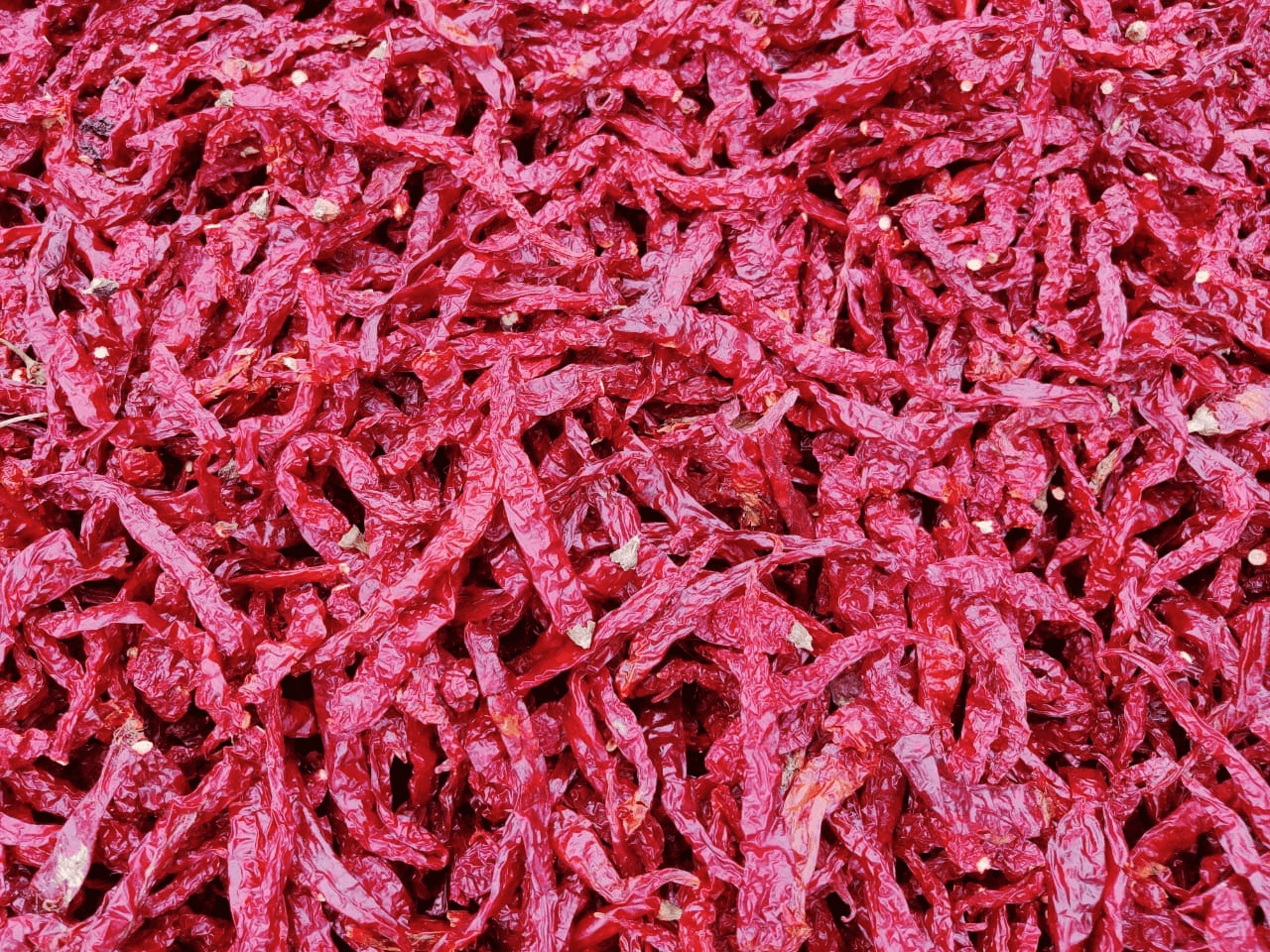
Teja S17 is the name most buyers reach for when heat is the priority. Pods are thin-skinned, a little wrinkled, and medium to bright red. Pungency is high, and the variety is used where a product has to carry noticeable heat even at a low inclusion rate.
Colour is acceptable but rarely the selling point. It's a heat chilli first and a colour chilli second.
Where Teja S17 Works Best
- Hot sauces and chilli pastes
- Chilli powder for markets that expect strong heat
- Snack seasonings and spicy coatings
- Chilli oleoresin extraction, where pungency yield matters
Points to Watch
Pungency shifts with crop year, growing area and harvest stage. Quoted SHU figures differ between suppliers and labs, so ask for a report on the lot in front of you and ignore the general number.
Byadgi: The Colour-First Chilli
Byadgi is long, deep red and heavily wrinkled, with low-to-moderate pungency and strong colour. That's why it's chosen to give pickles, masalas, marinades and sauces a rich red without making them uncomfortably hot.
The flavour is rounder than the hot types, mild and slightly sweet, which suits recipes where chilli should colour the dish and not dominate it. It's also a common raw material for colour-focused oleoresin.
Where Byadgi Works Best
- Tandoori, tikka and curry masalas
- Pickles and ready-to-cook pastes
- Sauces where a bright red finish is needed
- Blends where heat is added separately from another chilli
Points to Watch
Byadgi usually costs more than the hot varieties, since colour-grade lots are in demand and supply is tied to one region. Genuine Byadgi can also be mistaken for similar wrinkled types, so get variety, origin and colour values in writing.
LCA-334: The Balanced Hot Chilli
LCA-334 is a hot chilli with reasonable colour, sitting between Teja S17 and the colour-led types. Buyers like it when they want good heat but don't want to give up appearance entirely.
Specifications vary more than people expect. Different suppliers describe 334 differently, and trade names get used loosely, so treat the label as a starting point and the lab report as the deciding document.
Where LCA-334 Works Best
- General-purpose chilli powder
- Seasoning blends needing both heat and colour
- Crushed chilli and flakes for retail and foodservice packs
- Manufacturers trying to balance cost and performance
Side-by-Side Comparison
The table below shows general characteristics. Actual values depend on crop, origin, processing and supplier.
| Variety | Typical Pungency | Colour | Common Applications | Best Suited For |
| Teja S17 | High | Medium to good | Hot sauces, powder, oleoresin | Heat-driven products |
| Byadgi | Low to moderate | Deep red | Masalas, pickles, sauces | Colour-driven products |
| LCA-334 | Medium to high | Usually moderate | General powder, seasonings, flakes | Balanced heat and colour |
Use the table to shortlist, not to write a specification. Your own trials and lot reports make the final call.
Choosing the Right Chilli for Your Application
Start with what you're making and work backwards. A hot sauce asks for different things than a pickle masala, and a snack coating behaves differently from a curry paste.
Pungency
If consumers expect a burn, Teja S17 or LCA-334 usually makes sense. If the recipe should stay mild, Byadgi is the safer base. Many manufacturers blend two varieties to hit a target heat and colour instead of leaning on one.
Colour and ASTA Value
ASTA value matters most where visual appeal sells, and deep red products lean toward Byadgi. Ask for the reading on each lot, because colour fades in storage and differs between harvests.
Flavour and Aroma
Heat chillies taste sharper, Byadgi rounder. If chilli is a major flavour, trial samples in your own recipe before approving a variety.
Whole, Crushed or Powder
Whole chilli keeps its quality longer and lets you check stalks, colour and foreign matter. Crushed chilli and powder save time but expose more surface to air, so colour and aroma fade faster. Powder also calls for closer attention to adulteration and grind quality.
Bulk-Buyer Considerations
Batch Consistency
No two crops are identical. Agree tolerance ranges for pungency and colour in advance, and ask whether the supplier can hold a reference sample from each shipment.
Moisture and Quality Parameters
Moisture affects shelf life and mould risk. Request results for moisture, foreign matter, broken pieces and stalk content. Where relevant, ask for aflatoxin and pesticide residue results too, since limits differ by importing country.
Food-Safety and Compliance
Importing markets set their own residue and contaminant limits. Confirm your supplier understands the rules of your destination and can supply the documents. Verify certifications; don't assume them.
Supplier Reliability
A good supplier can explain sourcing, grading and storage clearly. Be wary of anyone promising identical specifications every season.
Cost Versus Performance
The cheapest chilli isn't always the cheapest to use. A cheaper, weaker-colour lot may need a higher inclusion rate or added colour, which wipes out the saving. Compare cost per unit of heat or colour delivered, not just price per kilo.
Export and Import Considerations
Bulk chilli usually travels in bags in containers, and the packing format affects cost and condition on arrival. Agree packing, labelling and loading before you contract. Check the destination's rules on pesticide residues, mycotoxins and permitted colours as well, because a rejected consignment costs far more than the price gap between two suppliers. Allow for transit time too: long sea freight in humid conditions can raise moisture if the packing is poor.
Seasonality and Planning
Indian chilli is harvested once a year in the main regions, with new crop typically arriving early in the year. Prices follow crop size, demand and cold-store stock, so buyers who plan quarterly or annual needs often negotiate better than spot buyers. Cold-stored chilli can be perfectly good; just ask how long it's been held and request fresh colour and moisture results.
Final Point
Choose by application, not reputation. Byadgi for colour, Teja S17 for heat, LCA-334 for balance, then confirm every lot with test reports and a sample trial. A sensible route: shortlist two varieties, request lot-specific samples, run them in your own recipe, and approve a supplier only after the first commercial shipment matches the sample. That protects quality and cost both.
FAQs
-
Can I blend Teja S17 and Byadgi in one product?
Yes, and many manufacturers do. Blending lets you set heat and colour separately. Trial ratios on a small scale and make sure the blend behaves consistently across batches. Keep the heat chilli and colour chilli as separate lines on your purchase order so each can be tested alone.
-
Is LCA-334 a substitute for Teja S17?
Sometimes. It works where moderately high heat is acceptable, but results differ by lot. Test samples before switching a running product, and compare colour as well as heat.
-
What documents should I ask for before ordering?
A certificate of analysis covering pungency, ASTA colour, moisture and contaminants, plus origin and packing details. Ask for the packing date and crop year too, since both affect colour.
-
How should dried chilli be stored?
Cool, dry and away from light. Whole chilli stores better than powder, which loses colour and aroma faster. Sealed, lined bags in a ventilated store beat open stacks against walls or floors.
-
Does a higher SHU mean better quality?
No. SHU measures heat only. Quality also depends on colour, moisture, cleanliness and safety results. A lot with very high SHU but weak colour or high moisture may suit one product and fail another.
