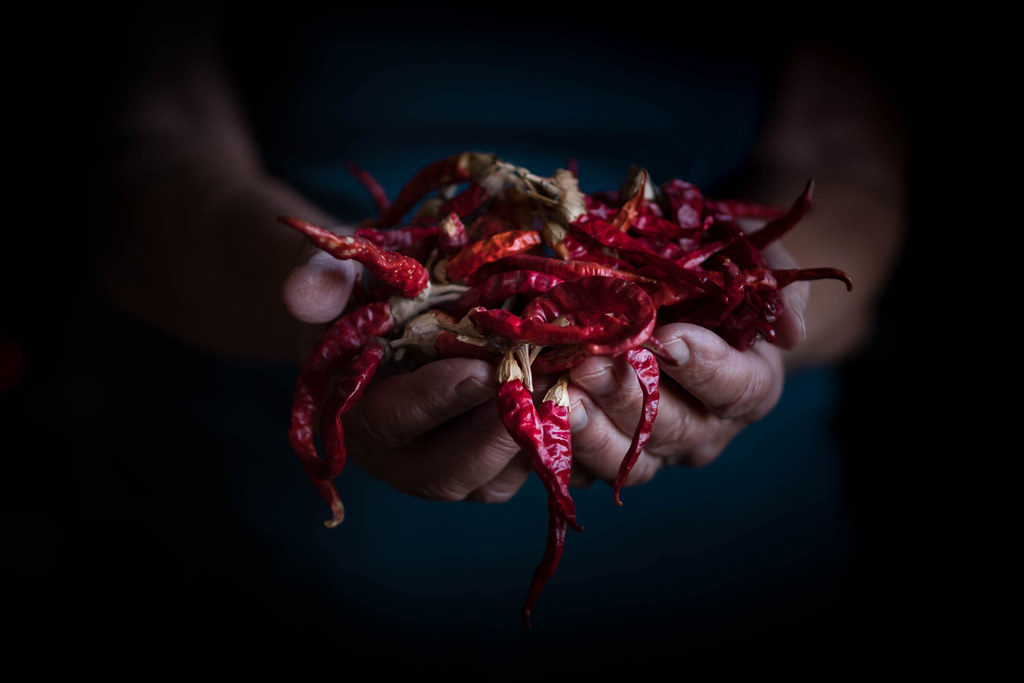
Buying dry red chilli in bulk isn’t just about picking whatever looks brightest or burns the hottest. For food manufacturers and importers, the right chilli has to match your finished product, your specification, what your customers expect, and your commercial constraints — all at once.
India is one of the biggest chilli producers and exporters in the world, and that comes with a genuinely huge range of varieties across pungency, colour, size, flavour, and appearance. Great for choice, but it also makes sourcing trickier. A chilli that shines in a hot sauce might be completely wrong for a spice blend. A variety picked for its deep red colour might not bring anywhere near enough heat for the recipe you actually need.
Here’s what food manufacturers and importers should actually look at when buying Indian dry red chilli.
1. START WITH WHAT YOU’RE ACTUALLY MAKING
Before anything else, ask: what is this chilli going into?
- Spice blends usually need a balance of colour, aroma, and pungency.
- Chilli powder needs consistent colour and heat, batch after batch.
- Hot sauces usually require a flavor and a different taste.
- Pickles might need broken chillies that have the right texture and taste.
- Snacks and seasonings often do best with moderate heat and strong colour.
- Processed meats need specific heat and colour depending on the formulation.
Nail down the application before you even talk to suppliers — it makes finding the right variety and spec far easier.
2. PICK THE RIGHT VARIETY
India grows types of dry red chilli each, with its own personality. India sells Byadgi, Teja, Guntur Sannam Wonder Hot and 334/S4 among regional varieties. Byadgi is known for a strong red colour paired with fairly moderate heat, which makes it popular wherever appearance matters most. Teja generally runs hotter and gets picked when a stronger kick is the priority. Guntur and its related varieties are traded widely and can offer different combinations of heat, colour, size, and flavour depending on the grade and origin.
Don’t choose a variety just because the name is familiar — always check the actual specification of the lot in front of you.
3. UNDERSTAND COLOUR AND PUNGENCY SEPARATELY
Colour and heat are the two parameters buyers care about most, and they’re worth treating as distinct.
Colour is usually discussed in terms of ASTA value — the higher the number, generally the stronger the colour extraction, though processing and storage still play a role. Pungency comes mainly from capsaicinoids, particularly capsaicin, so it’s worth specifying the actual heat level you need rather than trusting a variety name alone. A manufacturer building a bright red seasoning with modest heat needs a very different chilli from one making an extra-hot sauce — the right balance depends entirely on the product.
4. CHECK MOISTURE AND PHYSICAL QUALITY
Moisture is a big one for dried chilli. Too much of it shortens shelf life and raises the risk of mould and quality loss during storage, so pin down a clear moisture spec before you buy.
Beyond that, physical inspection should cover the whole-to-broken ratio, colour and appearance, size uniformity, stem content, foreign matter, insect damage, mould or visible deterioration, damaged or discoloured pods, and general odour and freshness. A sample that looks great on the surface isn’t enough on its own — the full lot needs to consistently hit the agreed spec.
5. TREAT FOOD SAFETY AS NON-NEGOTIABLE
For commercial importers and manufacturers, food safety isn’t a box to tick after the fact — it’s part of the core sourcing decision.
Dry red chilli can carry microbial contamination, pesticide residues, mycotoxins, Sudan dyes, and other contaminants if production or handling falls short anywhere along the chain. Depending on your destination market, you may want lab testing covering pesticide residues, aflatoxins, ochratoxin A, salmonella, heavy metals, Sudan dyes, moisture, colour value, and pungency. Exactly what to test for should follow the destination country’s regulations and your own product requirements — and make sure the supplier can back every shipment with proper documentation and traceability.
6. DECIDE ON WHOLE, STEMLESS, OR POWDERED
The physical form changes both price and how the chilli fits your process. Whole dry chilli suits spice processing, pickling, foodservice, and further grinding. Stemless chilli cuts down on cleaning and prep for some processors. Crushed or cut chilli works well for certain seasoning applications. Chilli powder is the most convenient but demands close attention to purity, particle size, colour, heat, and microbiological quality. Whatever you choose, define the form and acceptable tolerances clearly before ordering.
7. ASK ABOUT ORIGIN AND TRACEABILITY
Quality shifts with growing region, variety, farming practices, weather, and how the chilli was harvested and handled afterward. Ask suppliers directly where the chilli was grown and processed — traceability matters even more for larger buyers who need to satisfy customer, regulatory, or certification requirements. A supplier worth working with should be able to explain the product’s origin clearly and back it up with documentation.
8. COMPARE SAMPLES BEFORE GOING BIG
One of the safer moves in bulk chilli buying is comparing samples side by side rather than picking a supplier on price alone. Request samples from a shortlist and judge them against the same specification: colour, pungency, aroma, moisture, physical appearance, cleanliness, lab results, packaging, price, and documentation.
A chilli that costs a bit more upfront can end up cheaper overall if it delivers better colour, more consistent heat, lower cleaning losses, and fewer quality headaches down the line.
9. DEAL WITH THE PACKAGING AND STORAGE
Packaging helps keep the chili in condition while it is being moved and stored. Export shipments are usually in food grade bags, lined woven sacks, cartons or other formats that are agreed upon depending on the product and where it is going. Make sure to check the weight for each bag the type of packaging material any inner liner needs, the labels, the batch identification, the packing dates and the storage conditions. The chili itself must be kept in an dry place away, from moisture sunlight, strong smells and any chance of getting dirty.
10. JUDGE THE SUPPLIER, NOT JUST THE CHILLI
A great spec on paper only gets you halfway there. It’s worth evaluating the supplier’s consistency, documentation practices, production capacity, export track record, and how reliably they communicate. Ask about their previous export markets, quality-control processes, testing facilities, certifications, lead times, and minimum order quantities. For anyone buying regularly, consistency shipment after shipment tends to matter more than winning the lowest price on a single order.
11. PUT THE SPECIFICATION IN WRITING
Before signing anything, get the requirements down on paper. A solid buying spec typically covers variety, origin, whole or stemless form, size, colour/ASTA value, pungency, moisture limit, foreign matter limit, insect damage tolerance, microbiological requirements, residue limits, packaging, quantity, shipment terms, and required certificates or test reports. It’s a small step that saves a lot of back-and-forth and gives both sides a clear benchmark for quality.
THE FINAL POINT
Buying Indian dry red chilli well takes more than comparing quotes. You need to weigh the intended application, variety, colour, pungency, physical quality, food safety, paperwork, packaging, and how reliable the supplier actually is.
The best chilli isn’t necessarily the hottest or the reddest — it’s the one that consistently gives your product exactly what it needs. Define your specs clearly, compare real samples, check the lab results, and build a relationship with a supplier you can count on. That’s what turns a one-off purchase into a dependable supply chain.
FAQs
-
Which Indian dry red chilli is best for food manufacturing?
There’s no single best variety — it depends on the application. Byadgi tends to get picked for colour, while Teja and other high-pungency varieties suit products that need real heat.
-
What should importers check before buying Indian dry chilli?
Variety, origin, colour, pungency, moisture, physical cleanliness, pesticide residues, microbiological parameters, contaminants, packaging, documentation, and supplier reliability.
-
Why is the color of ASTA?
It gives a number which shows how strong the color is. This helps buyers know the color without having to guess from a sample.
-
Should I buy chilli or chilli powder?
It depends on the way you work. Whole chillies or chillies without stems let you control the grinding and mixing better. Powder is easier to use. It should be carefully checked for quality and purity.
-
How do I maintain chili quality, between shipments?
Start with a specification. Approve samples first. Ask for lab reports. Watch each batch. Work with suppliers who have quality-control systems.
