
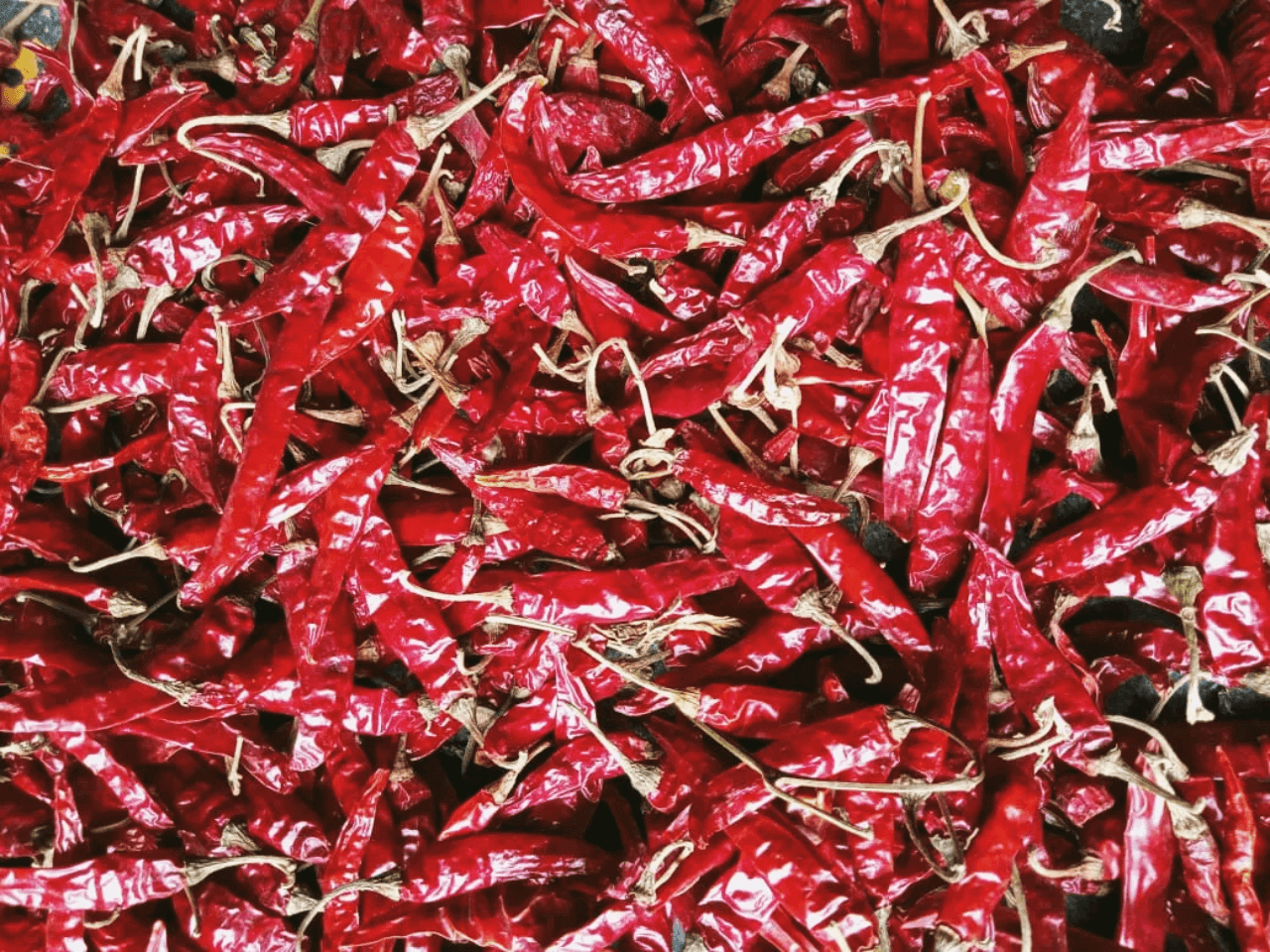
India lies at the middle of the global chilli trade, accounting for a big chunk in the share of the world’s dried red chillies and chilli-based products. For international buyers, whether spice importers, food manufacturers, wholesalers, or retail brands, understanding the Indian chilli export landscape is essential for informed sourcing decisions.
The provided profile covers major varieties, quality standards, regulatory compliance, and changing global demand and is geared to help buyers from the USA, UK, Europe, the Middle East, and Asia source with confidence.
India’s Role in the Global Chilli Market
India is the largest producer and exporter of red chillies in the world, favoured by its good climate, experienced farming communities, and a diverse range of chilli varieties. Millions of farmers in the States like Andhra Pradesh, Telangana, Karnataka, Tamil Nadu, and Maharashtra are involved in chilli cultivation.
Indian chillies are being exported to over 150 countries. These chillies have almost monopolized the international cuisines, spice blends, sauces, and processed foods in these countries. The dominant share is contributed by:
- Large-scale and consistent production
- Wide range of heat and colour profiles
- Competitive pricing
- Strong export infrastructure
- Growing focus on quality and compliance
Indian chilli exporters today are no longer mere commodity suppliers but have emerged as strategic partners to global buyers, desiring continuity with traceability and long-term security of supplies.
Understanding Indian Red Chilli Varieties
One of India’s biggest strengths is the diversity of chilli varieties it offers. Each variety serves a distinct purpose based on pungency, colour, size, and end use.
Guntur Red Chilli
Guntur is one of the most commonly exported chillies from India. They are recognized by their high pungency and flavour and are commonly used in:
- Hot sauces
- Spice blends
- Pickles
- Food processing applications
They are particularly popular in the USA, Southeast Asia, and African markets.
Byadgi Chilli
Byadgi chillies are prized for their rich red colour and low level of heat. They are used liberally in:
- Chilli powder production
- Natural colour extraction
- Oleores
This variety is also the most preferred by food processors and producers concerned with appearance rather than heat.
Sannam Chilli
Sannam chillies provide an excellent mix of both colour and pungency, which makes them very appropriate for dried whole chilli shipments. These chillies can be shipped to the Middle East and even South Asia.
Teja Chilli
Teja chillies possess very high Scoville Heat Units (SHU). These chillies are in demand in markets with a strong preference for hot peppers, whether they are Asian or African.
Kashmiri Chilli
Kashmiri chillies are mild but have good visual appeal and flavour. They are often used as a high-end spice blend ingredient and are popular among certain ethnic groups, especially in the UK or Europe.
Forms of Indian Chillies Supplied to Global Buyers
Indian exporters who export chillies provide the commodity in a variety of forms to cater to different needs:
- Crushed or flaked chill
- Chilli Powder
- Custom-processed chillies for oleoresin
Such flexibility is likely to enable purchasers to purchase the precise products they require.
Quality Standards Followed by Indian Chilli Exporters
Quality is a decisive factor for global buyers, especially in regulated markets such as the USA, UK, and Europe. Leading Indian chilli exporters follow strict quality control measures throughout the supply chain.
Farm-Level Quality Control
Quality begins at the farm. Reputed exporters work closely with farmers and Farmer Producer Organisations (FPOs) to ensure that:
- Good Agricultural Practices (GAP
- Responsible use of
- Proper methods of harvesting and drying
- Uniform maturity of chillies
This produces better consistency as well.
Processing and Cleaning
Export-grade chillies pass through various processing stages, among which:
- Pre-cleaning to remove dust, stones, and other debris
- Mechanical and manual sorting
- Removal of damaged and discoloured pods
Better facilities assist in the maintenance of hygiene.
Steam Sterilisation
Steam sterilisation is commonly used to ensure compliance with the various international standards regarding microbes. It helps:
- Retain bacterial load
- Meet ASTA and FDA requirements
- Improve Shelf Life Without Chemicals
This process is more prominent during exports to the USA and Europe.
Compliance with International Regulations
The global chilli market is overseen by food safety and import regulations that have to be adhered to. The Indian exporters of chilies who export their commodities to serve the global market are obliged to comply with:
- American Spice Trade Association (ASTA) Standards
- FDA regulations for the USA
- UK and EU food safety norms
- HACCP and ISO certifications
Pesticide Residue Management
One of the biggest concerns of buyers from other countries is pesticide residue. top exporters take the following steps:
- Controlled
- Farmer
- Regular laboratory testing
- Batch-wise residue analysis
Only compliant lots are approved for exportation, thus minimizing the chances of rejection in export shipments.
Export Documentation
Professional exporters handle all the requisite documents, which include:
- Certificate of Analysis (COA
- Phyto’s Certificate
- Fumigation
- Packing list and commercial invoice
Accurate documentation is necessary to enable smooth clearance and approvals from Customs and Government Authorities.
Global Demand for Indian Red Chillies
The demand for Indian chillies will persist, considering the changing food habits and the developing food industries across the globe.
USA
The USA is a significant importer of Indian red chillies for the use of:
- Hot sauces
- Seasonings
- Ready to foods
- Ethnic and fusion cuisines
Buyers care about quality, compliance, and consistency.
UK and Europe
UK and European markets prefer chillies that are:
- Tighten up on
- High colour value
- Reliable documentation
Indian exporters who have established robust quality systems are already positioned in these markets.
Middle East and Asia
These areas require huge quantities of whole dried chillies for their traditional preparation of meals. Here, price competitiveness is an important factor.
Africa
There is good demand for high pungency types like Teja and Guntur chillies in African markets.
Choosing the Right Indian Chilli Exporter
For global buyers, choosing an appropriate exporter is very important, and it involves several factors, namely:
- Proven export experience
- Compliance with international standards
- Product consistency
- Transparent communication
A reliable exporter is like a partner, not merely a supplier.
