

Picking a good dry red chilli isn’t as simple as grabbing whatever looks reddest or tastes hottest in the sample bag. For food manufacturers, spice traders, and commercial buyers, the chilli you choose shapes the colour, aroma, flavour, and heat of everything you make — and two batches that look nearly identical can behave completely differently once they hit production.
One chilli might give a gorgeous deep red with barely any bite. Another might be brutally hot with almost no colour to show for it. That’s why it pays to treat heat, colour, and pungency as three separate things rather than one general idea of “spicy chilli.” What actually matters is how the chilli will be used — a batch destined for chilli powder needs a different balance than one going into a hot sauce, a pickle, or a snack seasoning.
COLOUR, HEAT, AND PUNGENCY AREN’T THE SAME THING
It’s tempting to lump these together, but they don’t move in lockstep, and mixing them up leads to costly buying decisions.
Colour is usually the first thing anyone notices, and a strong red look is what most buyers want when chilli is added for visual appeal. But looks can be deceiving — light, heat, oxygen, and moisture all chip away at pigment over time. Serious buyers care less about which sample looks brightest on the day and more about which variety actually holds its colour through processing and storage.
Heat comes down to capsaicinoids, mainly capsaicin, measured on the Scoville scale. More heat isn’t automatically better. A mild seasoning producer might want strong colour with only moderate heat, while a hot sauce brand is specifically hunting for high SHU numbers.
Pungency is really just the overall intensity of that spicy sensation — tied to capsaicinoid content, but thought of more practically as “how much punch does this deliver.” Worth repeating: high colour doesn’t mean high heat. Once buyers internalise that, they start choosing chillies that fit the job instead of just picking the reddest or hottest option on the table.
START WITH THE FINISHED PRODUCT, NOT THE CHILLI
The right chilli is whichever one satisfies what you’re actually building. A few examples:
- Chilli powder needs a balance of colour, heat, aroma, and yield.
- Hot sauces generally want strong, consistent pungency.
- Pickles benefit from noticeable heat plus recognisable chilli flavour.
- Seasoning blends usually need good colour without drowning out other ingredients.
- Snacks often favour moderate heat and eye-catching colour over raw pungency.
- Oleoresin production puts more weight on pigment and capsaicinoid concentration since specific compounds are being extracted.
Work out what the end product needs before you go shopping — it makes choosing the right variety and spec a lot easier.
COLOUR ALONE DOESN’T TELL YOU MUCH
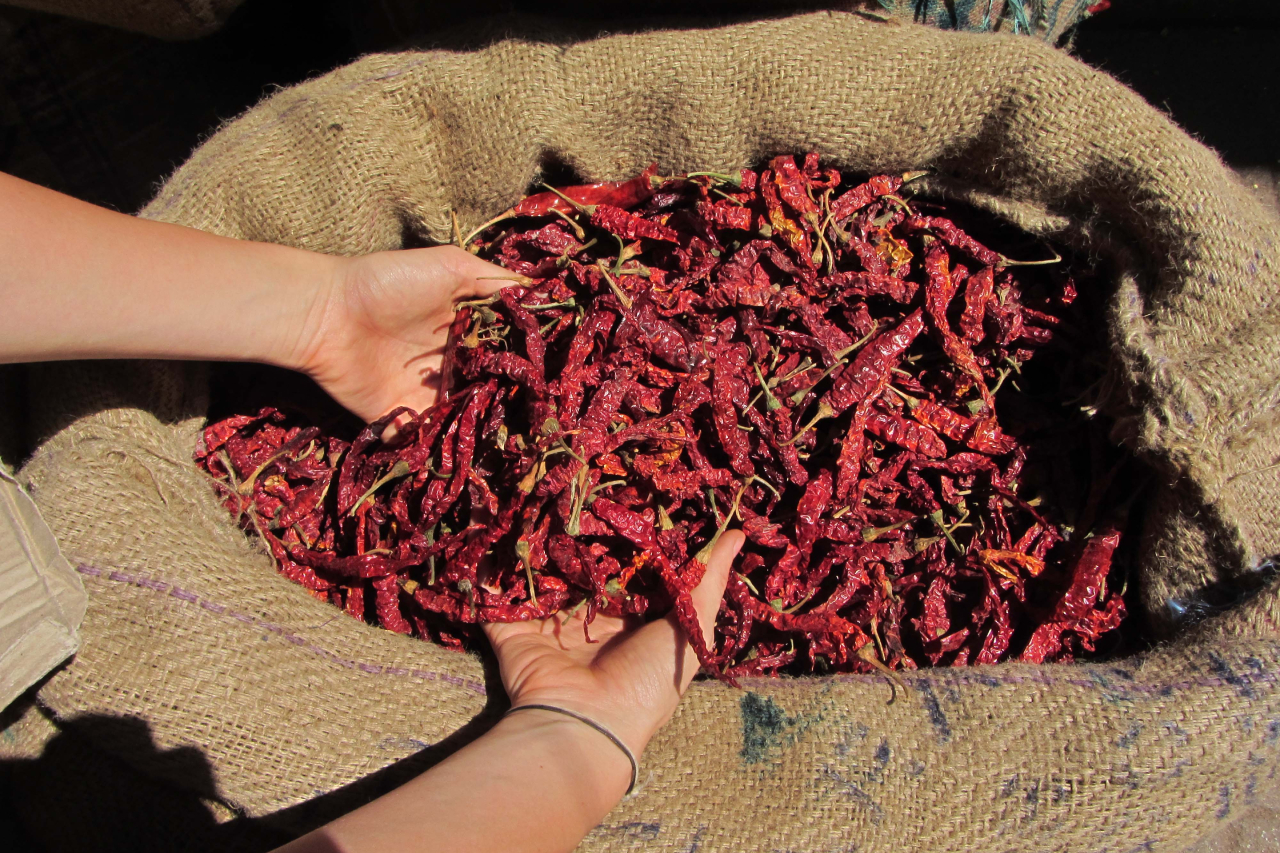
A vivid red pod looks great, but appearance shouldn’t be your only criterion. When checking chilli, look for even colour, proper dryness, a clean surface, no visible mould, minimal foreign matter, healthy pods without excessive breakage, consistent sizing, and that characteristic chilli smell.
Pods that look dark, faded, or patchy might point to poor storage or ageing. On the flip side, an unusually vivid colour doesn’t automatically mean better quality either. For commercial-scale purchasing, lab testing and supplier documentation give a far more reliable picture than eyeballing a sample.
HEAT CONSISTENCY IS WHERE BUYERS GET BURNED
One of the trickiest parts of chilli sourcing is that heat varies lot to lot, even from the same supplier. Variety, growing conditions, weather, soil, harvest timing, processing, and storage all play a role.
Suppliers may quote a target heat range, but if consistency matters to your business, confirm the actual spec for the specific lot you’re buying — not just the general range for the variety. Swap in a hotter batch of raw material and your finished product’s flavour profile can shift even though the recipe never changed. Locking in an agreed specification before shipment goes a long way toward avoiding that headache.
MOISTURE AND STORAGE MATTER MORE THAN PEOPLE THINK
Dry red chilli needs to be properly dried for safe storage and transport. Too much moisture invites mould, shortens shelf life, causes clumping after grinding, and changes appearance and aroma. Swing too far the other way — overly dry or poorly handled chilli — and you’ll deal with excessive breakage and product loss in transit.
Storage conditions matter just as much as the original quality. Keep chilli away from moisture, heat, direct sunlight, and contamination. If buying internationally, ask suppliers about their packaging, storage, and handling practices — not just the variety name.
WEIGH COLOUR AND HEAT SIDE BY SIDE
The clearest way to evaluate chilli is to treat colour and heat as independent purchasing parameters. Picture two samples:
Sample A — deep red colour, moderate heat, mild pungency. Sample B — medium red colour, very high heat, strong pungency.
A seasoning manufacturer chasing visual appeal without excessive spice would likely lean toward Sample A. A hot sauce brand chasing a serious kick would go with Sample B. Neither is objectively “better” — it’s entirely about fit for purpose.
DON’T SKIP AROMA AND FLAVOUR
Heat and colour get most of the attention, but they’re not the whole story. Good dry red chilli should smell clean and characteristic — a musty, stale, smoky, or off smell is usually a red flag for storage or quality problems.
Flavour varies by variety too. Some chillies deliver fairly one-dimensional heat, while others bring a more distinct aroma and taste of their own. That distinction matters most in products where chilli is a lead flavour, not just a background note. A sample evaluation before committing to a bulk order helps confirm whether a chilli plays well with the rest of your formulation.
ASK SUPPLIERS FOR REAL NUMBERS
Professional buyers shouldn’t settle for vague claims like “high quality” or “very spicy.” Push for measurable specifications relevant to your use case — variety, colour value, SHU range, moisture, foreign matter, broken pods, aflatoxin and microbiological limits, pesticide residue compliance, packaging, harvest information, and country of origin.
Exact requirements depend on your destination market and intended use, but clear numbers on paper make it much easier to compare quotes across suppliers.
TEST BEFORE YOU COMMIT TO BULK
A pre-shipment or pre-purchase sample is one of the cheapest ways to avoid an expensive mistake. Evaluate it for appearance, aroma, moisture, heat, colour performance, and how it behaves during processing.
CONSISTENCY BEATS A CHEAPER PRICE TAG
Price matters in any commodity purchase, but the lowest quote isn’t always the cheapest option in the long run. If a bargain chilli turns out inconsistent in colour or heat, you may end up reformulating, blending in another chilli, or rejecting part of the shipment — and those costs can eat right through whatever you saved upfront.
A supplier who reliably hits an agreed spec, batch after batch, tends to deliver better value over time. For ongoing procurement, nail down a clear specification early and keep the conversation with your supplier going throughout the season.
FINAL THOUGHTS
Choosing dry red chilli based on heat, colour, and pungency takes more than picking the reddest or hottest pods in front of you. Start with what your finished product actually needs — how much colour, heat, aroma, and flavour — then measure chilli varieties against that, not the other way around.
Above all, remember colour and heat aren’t the same thing. A chilli can look stunning and still be relatively mild, or pack serious heat with modest colour. Once buyers grasp that, they make sharper purchasing calls and get more consistent results batch after batch.
The practical approach: define your specification, request representative samples, verify the parameters that matter, and work with a supplier who can consistently hit the mark.
FAQs
-
If I’m buying dry red chilli, what should I check first?
It really depends on what you’re making. Start with the colour, heat, pungency, moisture, aroma, and cleanliness you need for your product. When you know your target, then it is much easier to select the right chili.
-
Can I assume that a very red chilli will also be very hot?
Not necessarily. This is a common mistake. Some chillies give you a deep red colour but only mild heat, while others can be quite hot without having the same strong colour. Colour and heat need to be checked separately.
-
How do I know how hot a chilli actually is?
I found that the chilli’s Scoville Heat Unit (SHU) value is the way to know how hot a chilli really is. The SHU value tells you exactly how hot the chilli is so you do not have to guess from how the chilli looks or how it tastes.
-
Is there any need to sample a chili before placing an order?
Yes, especially when you want an order. I always recommend sampling a chilli before ordering a shipment. A sample lets you check if the chilli is the colour, the right heat, the right moisture, the right aroma and the right overall quality before you decide to order more.
-
What should I actually ask a chilli supplier before buying?
Don’t just ask for the price. Ask about the chilli variety, colour value, heat range, moisture, foreign matter, origin, packaging, food-safety requirements, and available laboratory or compliance documents. A clear specification at the beginning can save you a lot of trouble later.
