
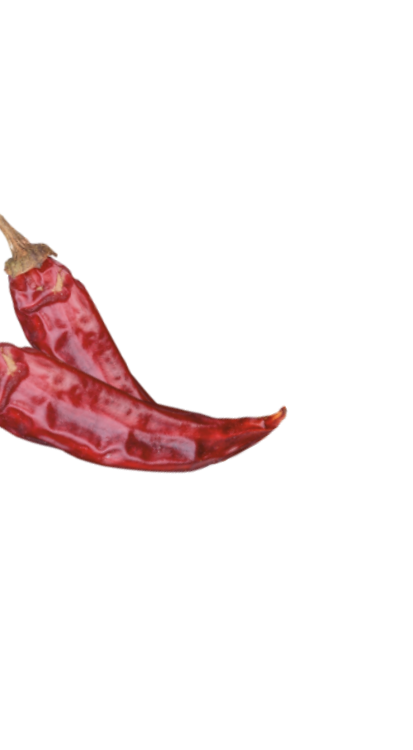
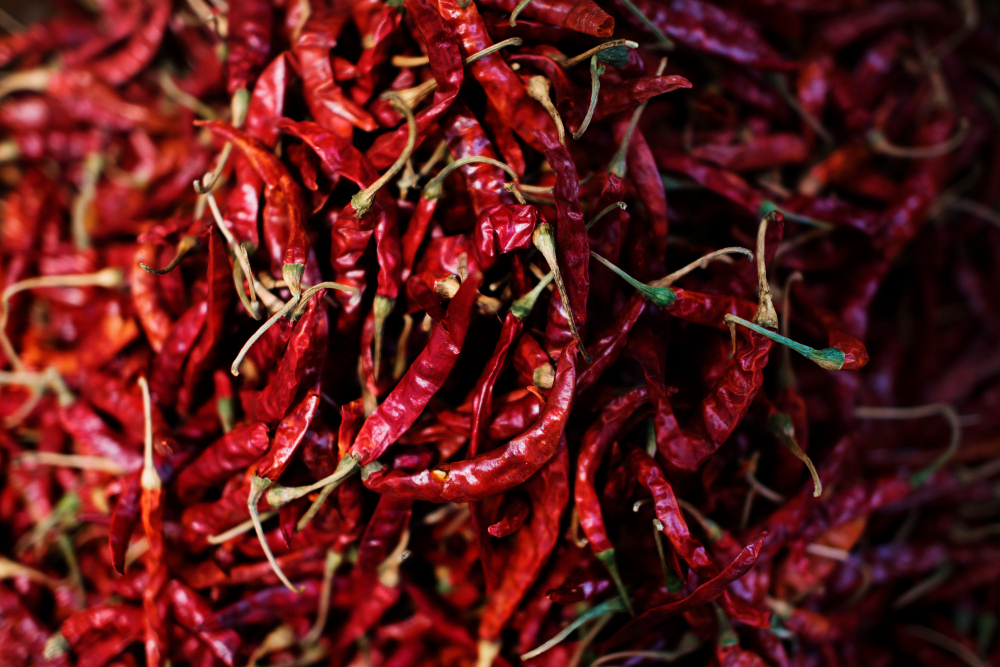
India is the world’s largest producer, consumer and exporter of dry red chillies. Indian chillies, from the fiery Guntur varieties to the vibrant Byadgi chillies known for their rich colour, are used in food manufacturing, spice blending, retail packaging, sauces, seasonings and food service applications across the globe.
Importers buying dry red chillies from India can benefit from a wide range of varieties, competitive pricing, consistent supply and established export infrastructure. Successful importing requires knowledge of product specs, quality standards, documentation, logistics and sourcing of suppliers.
This guide will help international buyers understand everything about importing dry red chillies from India.
Why to Import Dry Red Chillies from India?
India is a leading player in the international chilli trade, with exports to countries in Asia, Europe, North America, the Middle East and Africa.
Some of the major benefits of sourcing from India are;
- A host of chilli varieties
- Competitive pricing
- Developed export supply chains
- Big production volumes
- Availability of customised specifications
- Robust processing and cleaning infrastructure
Indian exporters can offer whole dry chillies, stemless chillies, crushed chillies, chilli flakes, chilli powder and value added spice products as per buyer requirements.
Popular Indian Dry Red Chilli Types
1. Guntur Chilli
One of the most widely traded chilli varieties from India.
One of the most traded chilli variety from India.
Features:
- Strong pungency
- Deep red colour
- Used in food preparation and spice blends
Application:
- Spices
- Sauces
- Spice production
- Comestibles
2. Chilli (Byadgi)
More famous for its deep red colour than extreme heat.
Features:
- Color value is excellent
- Moderate pungency
- Different smell
Uses:
- Extraction of oleoresin
- Colouring food
- Blends of spices
3. Teja Chilli
Premium quality hot chilli variety.
Features:
- Very high pungency
- High heat profile
- Strong demand in international markets
Uses:
- Spices
- Spices processing
- Industrial food production
4. Sannam Chilli
Widely used by spice processors and wholesalers.
Features:
- Equalised heat
- Good colour
- Multiple applications
Applications:
- Spices in retail packets
- Processing of food
- Sales to foreigners
Chilli specifications explained
Buyers are advised to define quality parameters clearly before importation.
Common specifications are:
Humidness
Average export grade:
- As high as 10-12%
Reduced moisture content improves shelf life and decreases the risk of mould growth.
Colour depth
In terms of ASTA units.
Normal values are:
- 50 ASTA TO 180+ ASTA
ASTA values higher than 0.7 indicate a stronger red colour.
Pungency Expressed in Scoville Heat Units (SHU).
Examples:
- Light varieties: 15,000-30,000 SHU
- Medium varieties: 30-50,000 SHU
- Hot varieties: 50,000 – 100,000+ SHU
Foreign Bodies
Typical export requirement:
- 1% maximum
Foreign material can be dust, stems, stones or other contaminants.
Damaged Pods
Buyers sometimes say:
- Maximum 1-3%
Aflatoxin B
In many countries there are regulations governing the levels of aflatoxin in spices.
Exporters may use laboratory reports from accredited testing laboratories to demonstrate compliance.
How to Choose the Right Supplier
One of the most important aspects of imports is the choice of supplier.
Seek exporters who:
- Export experience
- Quality consistency
- Systems of traceability
- Ability to test quality
- Food safety certification
- Reliable logistics support
Please ask the following before ordering:
- Product specifications
- Product photos
- Lab reports
- Company Snapshot
- References or export history
A good supplier is transparent and responsive through the entire process.
Certifications and Food Safety Requirements
Depending on the country of destination, importers may need to have certain certifications.
The most popular certifications are:
- HACCP
- ISO 22000
- BRCGS
- FSSC 22000
- Organic Certification
- Kosher Certification
- Halal Certification
Always check destination country requirements prior to shipment.
Import Documentation Required
The following export documents are required for most shipments:
Commercial Invoice
Includes:
- Description of product
- Amount
- Price
- Incoterms
Packing List
Details about:
- Number of bags
- Net weight
- Gross mass
- Packaging requirements
Bill of Lading (BOL)
Issued by the carrier as evidence of shipment.
Certificate of Origin
Required by many of the customs authorities.
Phytosanitary Certificate
May be required depending on the country of import.
This is to certify that the product complies with the requirements of plant health.
Laboratory Analysis Reports
Typical tests include:
- Humidity
- Aflatoxin
- Pesticide residues
- Microbiological testing
Packaging Decisions
We can pack the Dry Red Chillies according to buyer's requirement.
Typical export packing:
- 10 kg PP bags
- PP bags of 20 kg
- PP bags 25 kg
- PP bags 50 kg
- Boxes
- Vacuum packaging
Retail markets can also benefit from customised private label packaging.
Logistics and Shipping
Dry red chillies are exported in general in:
Full Container Loads (FCL)
Best bang for the buck on larger amounts.
Usual container size:
20-ft Container:
- Approximately 12–14 MT
40-ft Container:
- Approximately 24–28 MT
Less-than-Container Load (LCL)
Ideal for small shipments and market testing.
Important points to consider when importing
Buyers need to assess prior to import:
Product Quality
Order pre-shipment samples and lab reports.
Stability of Prices
Prices of agricultural commodities fluctuate due to weather, crop yields and market demand.
Long-term supplier relationships can help you get better pricing.
Compliance with Regulations
Ensure product is in compliance with local food safety and import regulations.
Shipping time
Buy according to crop seasons and transit time.
Advance planning can help to avoid supply disruptions and save costs.
Why Many Buyers Buy Directly From India
Direct import from Indian exporters has several advantages:
- Reduced procurement costs
- Access to a broader range of products
- Direct interaction with suppliers
- Enhanced specification management
- Personalised packaging choices
- Enhanced visibility into supply chains
Direct sourcing can deliver substantial long-term value for food manufacturers, spice processors, wholesalers and distributors.
Conclusion
India’s dry red chillies continue to be one of the most dependable sources for overseas buyers. The country remains a popular sourcing destination for spice importers globally, thanks to its wide variety of chillies, competitive pricing, strong export infrastructure and experienced suppliers.
The most important factor in successful importing is to choose the right supplier, establish clear specifications, understand the regulations of the destination country and have good quality control procedures in place.
Global buyers can establish a dependable and profitable chilli supply chain from India through a systematic sourcing approach.
FAQs
-
Which variety of Indian chillies is good for export?
Popular export varieties are Guntur, Teja, Byadgi and Sannam chillies. The selection of the optimum variety is based on the buyer’s specifications for colour, pungency and use.
-
What is the normal moisture level of dry red chillies for export?
Most of the export shipments are supplied with a moisture content of 10–12% maximum for quality and shelf life.
-
Will I need a phytosanitary certificate to import chillies?
Most countries require an import permit for agricultural products, called a phytosanitary certificate. Importers should check the requirements of the country of import.
-
How do you normally pack dry red chillies for export?
Typical export packing consists of 10 Kg, 20 Kg, 25 Kg and 50 Kg polypropylene bags depending upon customer requirements.
-
How do I ensure imported chillies are of good quality?
Ask for product samples, laboratory analysis reports, pre-shipment inspection and detailed specifications before confirming an order.
