


Here's a story plenty of buyers will recognise. The sauce comes out paler than the approved sample. Or the masala turns out hotter than the label promises. Or the new lot grinds to a different shade from the last one. Nine times out of ten the trouble started at the purchase order, where somebody bought a chilli by its name instead of by the job it has to do. This guide walks through how to pick Indian dry chilli by function, what belongs in a written specification, and what to watch when you buy in bulk.
Start With the Role Chilli Plays in Your Product
Before you compare varieties, decide what the chilli is there to do. In some recipes it supplies heat. In others it supplies colour, and heat is a side effect you'd rather keep down. A lot of products need both, plus a certain flavour.
Put that on paper as three targets: a pungency range, a colour range and the flavour you want. Skip this step and the supplier can only quote against a variety name, and a variety name covers a very wide spread of actual quality.
Pungency: Matching Heat to the Recipe
Pungency is usually quoted in Scoville Heat Units (SHU), although many labs measure capsaicinoids by HPLC and convert the result. The same variety can test quite differently from one crop year or growing area to the next, so any published SHU range is a rough guide at best. A few habits save trouble:
- Give a range, never a single figure.
- Ask for a test report on the lot you're actually buying.
- Find out which method the lab used. Results from different methods don't always line up.
Most factories reach their target by blending. Put a hot variety together with a mild, high-colour one and you can land on a given heat at a given colour. When a new crop behaves differently, you change the ratio instead of the whole recipe.
Colour: Reading ASTA Values
ASTA colour value tells you how much colour a sample will release, and it's the number most buyers use to compare lots. Higher usually means the chilli colours a product more strongly, which can let you use less of it. It says nothing about heat. The two don't move together: some of the hottest chillies are only middling in colour, and some of the deepest reds are mild.
Colour also fades. Light, warmth, humidity and time all take it down, and powder loses it faster than whole pods. A lot that tested well at origin can read lower after months in a warehouse, so ask for the test date and crop year along with the figure. And don't trust your eyes alone: a bright-looking pod can still have a mediocre ASTA reading.
Flavour and Aroma
Flavour is the hardest of the three to specify, which is why it gets forgotten. Some chillies taste sharp and direct; others are rounder, even a little sweet. In a background role the difference barely registers. In a chilli-forward sauce or a signature masala, it can be the whole product. The only reliable way to approve flavour is to put samples in your own formulation and taste them.
Choosing the Form: Whole, Crushed or Powder
Whole Chilli
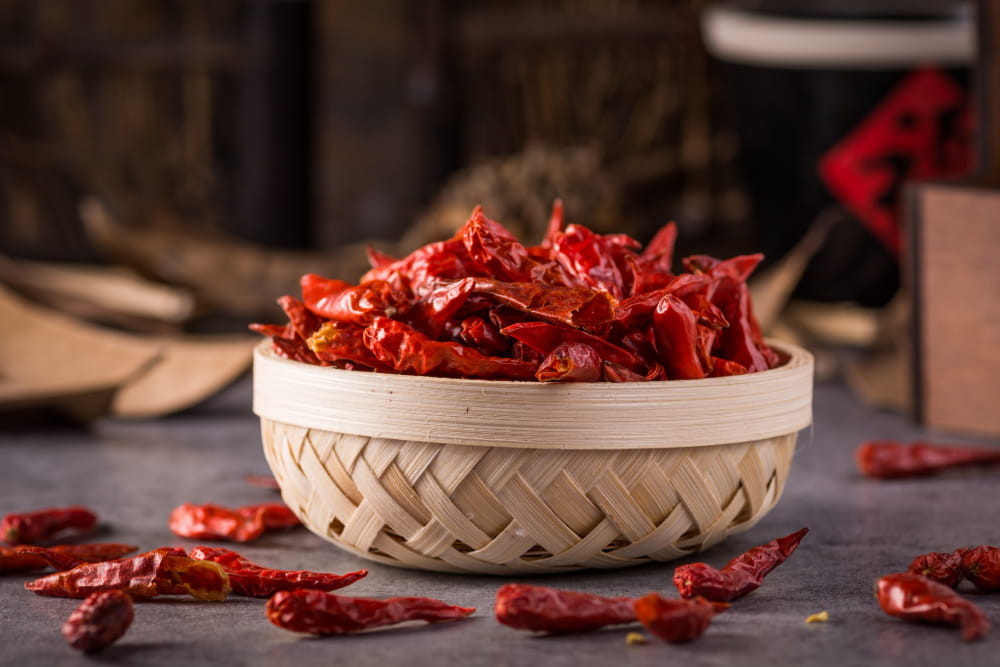
Whole dried chilli suits manufacturers who grind in-house or like to see what they're paying for. You can check stems, colour, seeds and foreign matter by eye, and whole pods keep colour and aroma longer. Both stem-on and stemless grades are traded. Stemless gives a cleaner grind; with stem-on lots, check how much stalk you're getting.
Crushed Chilli and Flakes
Crushed chilli and flakes are sold by particle size, and the proportion of seed changes both heat and appearance. Agree the size range and seed content up front. They're easy to leave vague and expensive to argue about later.
Chilli Powder
Powder saves you a processing step but gives you less to inspect, so adulteration and grind quality become bigger worries. Specify mesh size, ask how it's ground, and request testing for illegal dyes and contaminants. If your process needs a low microbial count, ask whether the supplier can steam-sterilise.
Comparing Common Indian Chilli Types
Treat the table as a starting point. Real numbers depend on crop, origin, grade and supplier.
| Type | Typical Pungency | Colour | Typical Use |
| Teja S17 | High | Medium to good | Hot sauces, powder, oleoresin |
| Guntur Sannam | Medium to high | Usually medium | Powder, general blending |
| Byadgi | Low to moderate | Deep red | Masalas, pickles, colour |
| Kashmiri-type | Mild | Bright red | Colour-led marinades, gravies |
| Wonder Hot | Hot | Good to strong | Blends needing heat and colour |
Trade names are also used loosely. "Kashmiri" in particular often means a mild red type, not a chilli from Kashmir, so ask a supplier exactly what they mean.
Matching Chilli to Your Application
Spice Blends and Masalas
Most masala recipes use two chillies, one for colour and one for heat. Keep them as separate line items so you can correct a batch by moving one without upsetting the other.
Sauces and Pastes
Wet products pull out colour and heat differently from dry mixes, and cooking can darken or dull the red. Trial the chilli through your real process, including heat treatment and shelf-life storage.
Pickles and Preserved Products
Oil and acid change how colour and heat develop over weeks. A pickle that looks perfect on packing day may drift in the jar, so approve a lot only after you've seen an aged sample.
Seasonings and Coatings
Particle size matters as much as heat here. Fine powder clumps in humid conditions, and coarse flakes can separate from finer ingredients in a dry mix. Check moisture and granulation, since both decide how the seasoning flows and cakes.
Oleoresin and Extracts
If you buy chilli oleoresin for standardised heat or colour, you still need to understand the raw material. Extraction depends on the pungency and colour of the chilli going in, so the raw-material spec affects both yield and cost.
Quality Parameters to Put in Writing
A specification only helps if both sides can test against it. The usual line items:
- Pungency and ASTA colour ranges
- Moisture content
- Foreign matter, broken pieces and stalk content
- Aflatoxin and pesticide residue limits for your destination market
- Illegal dyes, especially for powder
- Microbial limits, if your process needs them
- Packing, labelling and crop year
Import limits differ between countries, so confirm the rules for your own market before you agree terms.
Bulk Purchasing Considerations
Batch Consistency
Chilli changes with every crop, so don't ask for identical lots. Agree tolerance ranges, keep a retained sample from each shipment and compare new arrivals to an approved reference.
Supplier Capability
A good supplier can explain how chilli is sorted, graded, stored and tested, and can show you the paperwork. Ask about capacity against your yearly volume, not just the first order.
Cost Against Performance
Compare cost per unit of heat or colour delivered, not price per kilo. A weaker lot used at a higher inclusion rate can cost more in practice, and may change taste or texture too.
Documentation and Compliance
Ask for a certificate of analysis with every lot, plus the packing list and origin papers. Check the labels match what you ordered. If your customers need organic or food-safety certification, verify it instead of assuming.
Timing and Logistics
New crop arrives once a year, so many buyers plan annual needs around it. Cold-stored stock can be perfectly sound, but ask how long it's been held, and leave room for packing, transit and import clearance.
Final Point
Choose chilli by the work it has to do. Define the heat, colour and form you need, write them as ranges, test the real lot and trial samples in your own process before approving a supplier. If one variety can't hit both heat and colour targets, a blend of two usually can.
FAQs
-
How many chilli varieties should I use in a spice blend?
Two works for most: one for colour, one for heat. A third can help fine-tune flavour, but every extra variety adds sourcing work and one more thing to control. Give each its own specification so you can trace a problem back to its source.
-
What ASTA value should I ask for?
There's no universal number. It depends on how much colour your product needs and how much chilli you use. Base the minimum on your approved sample, confirm it on every lot, and ask which test method was used.
-
Is stemless chilli worth the extra cost?
Often, if you're grinding. Stalk adds fibre but very little colour or heat. Compare the stemless price against the yield you'd get from stem-on after removing the stalk.
-
How can I tell if chilli powder has been adulterated?
You can't, by looking. Use lab testing for illegal dyes and ask for batch-specific reports. Buying whole chilli and grinding it yourself gives you more direct control.
-
Can I switch chilli varieties without changing my recipe?
Rarely. A different variety shifts heat, colour and flavour all at once. Run trials, adjust inclusion rates and sign off on a pilot batch before changing anything on the line.
