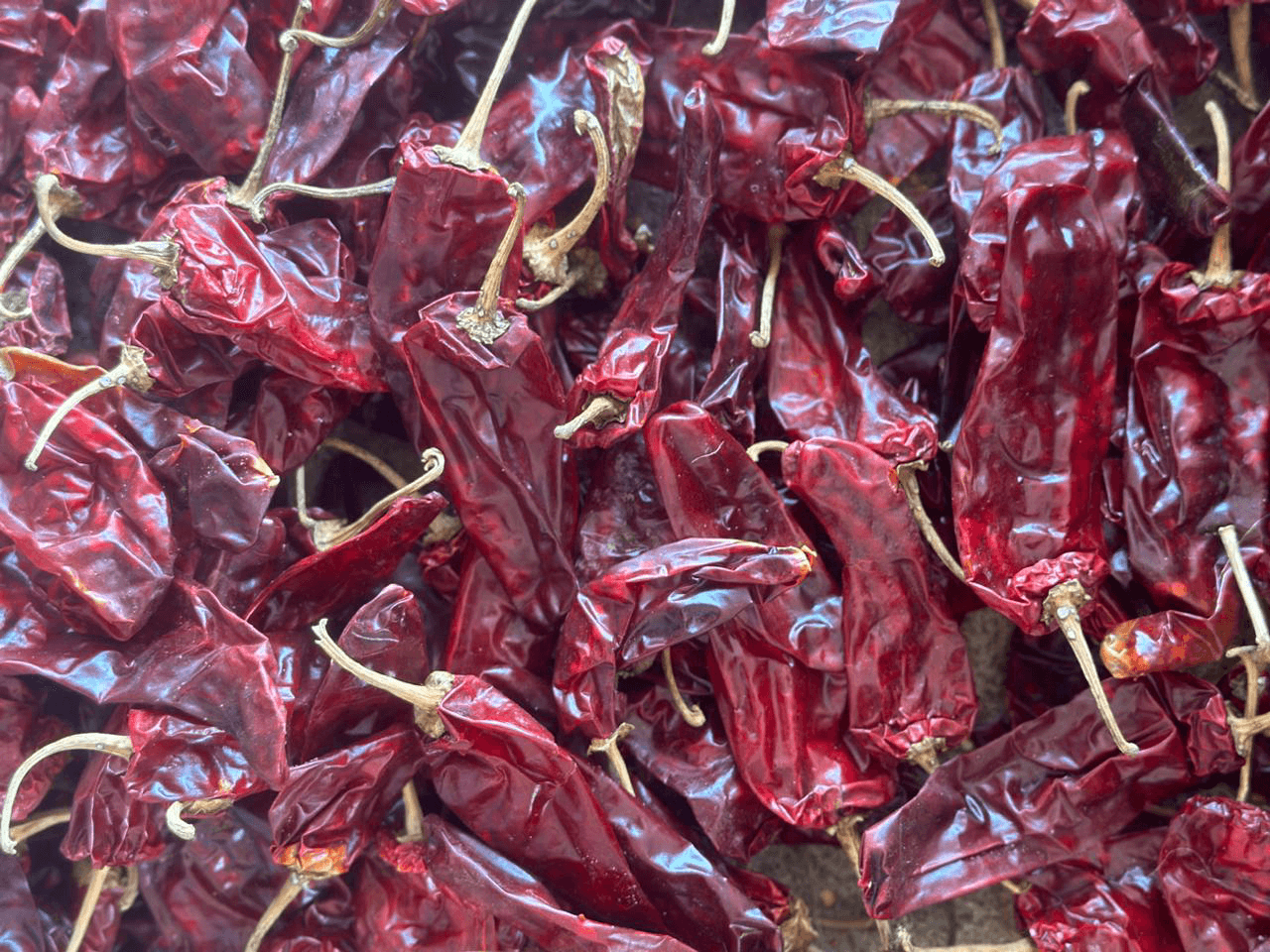
The Chapata Chilli (Capsicum annuum) is the 'master of color' in the world of spices. Renowned as the 'Tomato Chilli' owing to its unique and spherical shape, this extraordinary variety of chilli is cultivated under the golden rays of the Indian sun and in the rich earth of India in the Warangal and Ramnad districts.
The Chapata Chilli is the 'utility player' in the world of international food manufacturing and blending. Although it is cherished for its outstanding physical appearance and performance in the world of manufacturing, it is not cherished for its Scoville heat unit ratings. If you are searching for the variety of chilli that will yield the greatest amount of vibrant and natural red oleoresin and pulp with the greatest consumer-friendly heat, then the Chapata is the unrivaled champion.
Effective heat release in products
Provides heat without imparting much red colour
Efficient drying and oleoresin extraction
Reliable heat standardization for processing
What sets Chapata apart from the others is the incredible physical shape of the pepper and the ability to maintain a deep cherry-red color even after
being picked. While most peppers are sought after for their "heat," the Chapata pepper is sought after for its "Visual Pungency," the rich, lustrous
red coloring that promises a discerning customer a quality meal even before they take a single bite.
With its unique "tomato-like" shape and high flesh-to-seed ratio, it provides maximum pulp, making it perfect for natural color extraction and thick sauce bases.
This "natural packaging" preserves the high oleoresin content and prevents the pods from crumbling during mechanical sorting and transit.
It is widely recognized as a top-performing variety for paprika oleoresin extraction because it yields more natural red dye per kilogram of raw material.
We offer batches grown under Integrated Pest Management (IPM) protocols to ensure they meet the strict "clean label" requirements of the EU and Japan.
| Parameter | Typical Specification |
|---|---|
| Botanical Name | Capsicum annuum |
| Fruit Morphology | Short, broad, and round, often described as "tomato-shaped" or "blocky," with a thick, fleshy structure. |
| Skin Texture | Smooth, glossy, thick-walled, and noticeably free of the deep wrinkles found in other varieties. |
| Internal Anatomy | High flesh content with a balanced seed ratio; we ensure loose seeds in processed batches stay below 2%. |
| Color Transition | Transitions from a deep, healthy green to a brilliant, dark cherry red upon drying. |
| Stem Attachment | Available in three export formats: With Stem, Stemless, and Stem Cut. |
* Thin skin helps in quick evaporation of moisture during drying, and it also increases the yield of capsicum oleoresin.
What sets Chapata apart from the others is the incredible physical shape of the pepper and the ability to maintain a deep cherry-red color even after being picked. While most peppers are sought after for their "heat," the Chapata pepper is sought after for its "Visual Pungency," the rich, lustrous red coloring that promises a discerning customer a quality meal even before they take a single bite.
| Parameter | Range | Method |
|---|---|---|
| Scoville Heat Units (SHU) | 4,000 – 8,000 SHU | HPLC / Spectrophotometric |
| Total Capsaicinoids | ~0.15% | HPLC-FLD |
| Colour value | 120 –180 ASTA | Spectrophotometry |
| Moisture | Max 12% (Export Grade) | AOAC |
| Foreign Matter | Strictly kept between 1% - 2% | Mechanical Sortex |
Low moisture levels are strictly maintained to ensure microbiological stability and prevent the proliferation of storage-borne fungi.
| Parameter | Limit |
|---|---|
| Total Plate Count | < 100,000 cfu/g |
| Yeast & Mold | < 1 × 10³ cfu/g |
| E. coli | Absent in 25 g |
| Salmonella | Absent in 25 g |
| Aflatoxins | As per EU / USFDA limits |
The export quality of Chapata chillies must meet stringent international regulatory limits on pesticide and heavy metal residue.
| Parameter | Standard |
|---|---|
| Pesticide Residues | EU MRL / Codex / US FDA compliant |
| Heavy Metals | < 2.5 ppm |
| Sudan Dyes | Not Detected / Nil |
| Extraneous Matter | ≤ 1% |
| Aflatoxins | As per EU / US FDA limits |
We treat the processing of Chapata as a science and always ensure that the natural red pigments and essential oils are never compromised.


The chillies are processed in a controlled manner to retain capsaicinoid content
and minimize the risk of contamination.
This variety ensures consistent SHU value delivery, which helps to calibrate the heat level in food preparations.

EXPORT DESTINATIONS
ANNUAL SUPPLY CAPACITY
Storage conditions will also help in preserving the pungency and preventing loss of quality.
Preferably below 15°C
Keep away from heat sources. Refrigerated or cool-room storage preferred for long-term quality retention.
Controlled dry conditions
Humidity above 65% accelerates mould growth and capsaicinoid degradation. Use desiccant packs in humid climates.
UV-protected environment
Avoid direct sunlight exposure. Prolonged UV exposure degrades ASTA colour value and pungency levels.
Oxygen barrier packaging
Use moisture-proof, oxygen barrier packaging to prevent capsaicinoid degradation due to oxygen and moisture ingress.
When stored under recommended conditions (below 25°C, below 65% RH, sealed moisture-proof packaging).
All packaging options meet food-grade compliance standards and are designed to preserve product integrity during long-haul international transit.
Compared with the standard Guntur Sannam variety of approximately 35,000 SHU (Scoville Heat Units), the Chapata chillies are much milder in heat (4,000-8,000 SHU) and are therefore primarily used for their colour, thick pulp and shape, rather than burn.
We tap into this vast production capability to provide continuous supply of the product throughout the year.
Industrial processors prefer the Chapata variety for oleoresin extraction due to high "pigment recovery". The thickness of the pericarp (skin) and high ratio of flesh to seed yield more dye and pulp per kilogram of raw material than almost any other variety of Indian pepper.
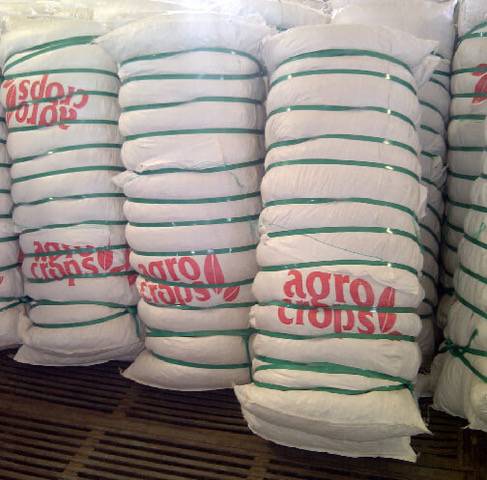
The physically rounded and less wrinkled shape of the Chapata chillies makes them bulkier than flat, elongated varieties. As a result, we typically load a maximum of seven metric tons of chillies into a 20-ft container and 14 metric tons into a 40-ft containers to prevent crushing of the pods during shipment.

Copyright in the pages and in the screens displaying the pages, and in the information and material therein and in their arrangement, is owned by Agrocrops Singapore Pte. Ltd. unless otherwise indicated.
The information and materials contained in these pages - and the terms, conditions, and descriptions that appear - are subject to change.
Agrocrops Singapore Pte. Ltd. and its group of companies, contractors, buyers and suppliers are the owners of the trade and service marks appearing on this website and all rights are reserved in respect of such trade and service marks.
The information and materials contained on this site, including text, graphics, links or other items - are provided “as is,” “as available. Agrocrops Singapore Pte. Ltd. does not warrant the accuracy, adequacy or completeness of the information and materials and expressly disclaims liability for errors or omissions therein. No warranties of any kind, implied, express or statutory, including but not limited to the warranties of non-infringement of third party rights, title, merchantability, fitness for a particular purpose and freedom from computer virus, are given in conjunction with the information and materials.
Agrocrops Singapore Pte. Ltd. shall in any way be liable for any damages, including without limitation direct or indirect, incidental, or consequential damages, losses or expenses arising in connection with this site or use thereof or inability to use by any party, or reliance on the contents of this site, or in connection with any failure of performance, error, omission, interruption, defect, delay or failure in operation or transmission, computer virus or line or system failure, even if Agrocrops Singapore Pte. Ltd., its representatives, are advised of the possibility of such damages, losses or expense.
All information, ideas, know-how and feedback provided and submitted to Agrocrops Singapore Pte. Ltd. through this site shall be deemed and remain the property of Agrocrops Singapore Pte. Ltd. for any and all purposes.
By accessing this, you agree to Singapore law shall govern such access and you agree to submit to the exclusive jurisdiction of the Singapore courts.
Please read the following Website Terms and Conditions carefully before using the Site and/or the Services, so that you are aware of your legal rights and obligations with respect to Agrocrops Singapore Pte. Ltd. and/or its related entities, affiliates and subsidiaries, and their respective successors-in-title (individually and collectively, “Agrocrops Singapore Pte. Ltd.”). If you do not agree to these Terms of Use, please do not use our Services.
These terms of service (“Terms”) govern your use and access to our services, including our website (our “Site”), our application (s) (our “App”), our application programming interfaces, our email notifications, and any information or content appearing therein, collectively our services (“Services”), regardless of whether you are a paid user or a non-paying visitor. All of the services available on or through the Site or otherwise offered, maintained and/or provided by us are referred to in this document as our "Services".
The Services and the Site are operated and provided by Agrocrops Singapore Pte. Ltd. (“Agrocrops”, "We" or “Us”) on behalf of itself and its group companies. Agrocrops is registered in Singapore under company number UEN : 202120863N and have our registered office at #3 Shenton Way, Shenton House #15-02, Singapore 068805 which is also our head quarters.
If you reside in Singapore or anywhere else in the world, your agreement is with Agrocrops Singapore Pte. Ltd.
The site and its contents are owned and operated by Agrocrops, and as such is Copyrighted. All company names and logos and all related products and service names, design marks and slogans are trademarks and service marks and are the properties of their respective owners and may not be reproduced or appropriated in any manner without the written permission of their respective owners. References to any names, marks, products or services of third parties do not necessarily constitute or imply Agrocrops’ endorsement, sponsorship or recommendation of the third party, information, product or service. No material, graphic or image from the Products may be appropriated or modified in any manner, or reproduced, republished, uploaded, posted, transmitted or distributed in any way, without the prior written permission of Agrocrops.No party is permitted to establish links to the Products without prior written permission from Agrocrops. Agrocrops reserves all right to deny permission for any such links. Agrocrops is not under any obligation to establish reciprocal links with any third party. Nothing contained herein confers any license or right under any copyright, patent, trademark or other proprietary rights of Agrocrops or any third party.
Agrocrops respects intellectual property rights of others and ask that you do too. In the event of suspected copyright infringement, please email us at samsu@agrocrops.com. We will respond to notices of alleged copyright infringement that comply with applicable legal requirements and properly provided to us.
Neither Agrocrops, any of its affiliates, subsidiaries, employees, agents, partners, principals and representatives nor any other person is, in connection with this site, engaged in rendering auditing, accounting, tax, legal, advisory, consulting or other professional services or advice. Each user agrees not to use the content of the Products as a substitute for independent investigations and competent financial and business judgment of the user of the Products and such user shall obtain professional advice tailored to his particular factual situation. Each user is responsible for all matters arising from its use of the Products.
Each user agrees to use the Products or services in accordance with these terms of use and for lawful and proper purposes and shall not:
The products and services may contain hyperlinks to other websites ("External Sites") which are neither maintained nor controlled by Agrocrops, or may contain content posted on or via the Products by third parties. Agrocrops shall not be responsible for any errors or omissions in any content in the products, services, or the content, products or services of any hyperlinked External Site or any hyperlink contained in a hyperlinked External Site, nor for the privacy and security practices employed by these External Sites, and under no circumstances shall Agrocrops be liable for any loss or damage of any kind incurred as a result of the use of any content posted or contained in e-mails or otherwise transmitted or displayed via the Products, or arising from access to External Sites. Use of the Products and any hyperlinks and access to External Sites are entirely at the user’s own risk.
The user acknowledges that Agrocrops has no control over and excludes all liability for any material on the Internet which can be accessed by using the Products. Neither will Agrocrops be deemed to have endorsed any such content thereto.
Agrocrops takes certain industry-accepted precautions to secure the products, services or portions thereof. However, the user understands and agrees that such precautions cannot guarantee that use of the products or services is invulnerable to security breaches, nor does Agrocrops make any warranty, guarantee, or representation that use of the products or services are protected from all viruses, worms, Trojan horses, and other vulnerabilities.
During the user’s use of the products or services, Agrocrops may issue to and request from the user’s computer "cookies" to enable more convenient browsing when the user revisits the site. The user must not alter any cookies sent to his/her computer from the site and must ensure that the user’s computer sends correct and accurate cookies in response to any relevant request from the site.
Agrocrops is committed to protecting and respecting your personal data.
Please read the Privacy Policy to understand our views and practices regarding your personal data and how we will treat it.
While every effort has been made to ensure that the information provided in this website herein is up to date and accurate, Agrocrops and its affiliates, subsidiaries, employees, agents, partners, principals and representatives make no representation or warranty of any kind either express or implied as to the completeness, correctness, accuracy, suitability, reliability or otherwise of the website or its content in this website or the results of its use for any purpose, all of which is provided "as is" and "as available". They do not warrant that this website or this server that makes it available is free of any virus or other harmful elements. Agrocrops and its affiliates, subsidiaries, employees, agents, partners, principals and representatives disclaim all warranties and obligations relating to this website, including but not limited to all implied warranties and obligations of merchantability, fitness for a particular purpose, title and non-infringement.
The information contained herein in this website shall be accessed and used at the user's own risk and to the fullest extent permissible and subject and pursuant to all applicable laws and regulations. Agrocrops and its affiliates, subsidiaries, employees, agents, partners, principals and representatives shall not be liable for any direct, indirect, incidental, special, exemplary, consequential or other damages whatsoever, (including but not limited to liability for loss of use, data or profits), including but not limited to contract, negligence or other tortious actions, arising out of or in connection with this site, even if any of Agrocrops and its affiliates, subsidiaries, employees, agents, partners, principals and representatives has been advised of the possibility of such damages or losses that were, are being or will be incurred.
Agrocrops reserves all rights to make any and all changes in this website at its sole discretion without prior notice to the user. Agrocrops reserves the right to deny access to this website to anyone at any time without prior notice. Materials on our website may include technical inaccuracies or typographical errors. Changes may be periodically incorporated into this material. Agrocrops may make improvements and/or changes in the products, services and/or programmes described in these materials at any time without notice.
Should the user respond to any part of the materials contained herein in this website with any communications including feedback data, such as questions, comments, suggestions, or the like, such information shall be deemed to be non-confidential and Agrocrops and its affiliates, subsidiaries, employees, agents, partners, principals and representatives shall have no obligation whatsoever with respect to such communications and shall be free to reproduce, use disclose and distribute the information to others without limitation, and shall be free to use in any way for any purpose whatsoever the content of such communications including any ideas, know-how, techniques or concepts disclosed therein.
The law applicable to the terms of use of this website is the law of the Republic of Singapore and the courts of the Republic of Singapore will have exclusive jurisdiction in case of any dispute.
We are committed to protecting and respecting your privacy. We collect your personal information and process your personal data in accordance to the law which regulates the processing of personal data. Please read the following carefully to understand our views and practices regarding your personal data.
This online privacy statement describes Agrocrops current online practices in respect of personal information collected through this website. If you do not agree with these terms, please do not disclose any personal information to us.
We collect your personal information in order to provide and continually improve our quality, approach, process and services that help you interact with the peanut community and us in a better way.
All our subsidiaries, associate companies, partner firms and any third party working with or for us, and who have access to personal information, will be expected to read and comply with this policy. No third party may access or process sensitive personal information held by us without having first entered into a confidentiality agreement.
Agrocrops privacy policy is subject to change for improvement at any time without any notification. To make sure you are aware of any changes to the policy, you may review the policy periodically.
This privacy policy was last amended on 18th of September 2020.
We collect personal data that is relevant to our business and/or employment relationship with you.
If you are a shareholder, director, corporate officer, manager, employee or appointed contractor of any business entity or individual, we may collect your personal data if it is relevant to our business relationship with you or in that entity.
We may collect personal data directly from you. We may sometimes collect information about you through third party when they are duly authorized by you to provide personal data from you. This may be done in person when you meet our staff or representatives, or over the phone, by email or through websites.
We may also collect your personal data about you from third party sources without directly involving you. For example, we may obtain your personal data from your family members or a government agency. We may also obtain your personal data from market research organizations or publicly available resources such as telephone directories or business directories.
A cookie is a text-only string of information that is transferred to the cookie file of the browser on your computer's hard disk so that we can recognize you as a repeat visitor.
A cookie will typically contain the name of the domain from which the cookie has come, the "lifetime" of the cookie, and a value, usually a randomly generated, unique number. Cookies are commonly used by most major websites to arrange their content to match your preferred interests.
This website will automatically gather personal information, such as your first name and email address, through the use of cookies when accessing enhanced and premium areas of the website.
Two types of cookies are used on this website:
These are temporary cookies that remain in the cookie file of your browser until you leave the site. We use session cookies:
These remain in the cookie file of your browser for much longer. We use persistent cookies:
The key purpose for which we need your personal data is to process your application or request, to proceed with any employment offers or business relationship with you or to contact you to provide any information to you pertaining to the Agrocrops. These include:
We do not provide your personal data to third parties outside the Agrocrops for purposes other than those set out above or purposed related to those set out above. We do not sell your personal data to any third parties.
We may disclose and/or share your information under the following circumstances:
Your personal information may be stored and processed in any country where we have offices or servers or in which we engage service providers. Your personal information may be transferred to countries outside your country of residence, which may have different data protection and data processing laws than those in your country. Any such transfer shall take place only in accordance with and as permitted by the law of your jurisdiction, but please be aware that the laws and practices relating to the protection of personal information are likely to be different, and in some cases may be weaker than those within your home jurisdiction. Regardless, in all events, we shall apply the provisions of this Privacy Policy to your personal information wherever it is located.
We have implemented technical, physical, and organizational security measures to protect against the loss, misuse, and/or alteration of your information. These safeguards vary based on the sensitivity of the information that we collect and store. However, we cannot and do not guarantee that these measures will prevent every unauthorized attempt to access, use, or disclose your information since despite our efforts, no Internet and/or other electronic transmissions can be completely secure.
Agrocrops does not knowingly collect personal information or any other identifying data from children under 13 years of age. If we become aware that we have collected personal information (as defined by the Children’s Online Privacy Protection Act) from children under the age of 13, or personal data (as defined by the EU GDPR) from children under the age of 16, we will take reasonable steps to delete it as soon as practicable.
We retain the information we collect for as long as necessary to fulfil the purposes set forth in this Privacy Policy or as long as we are legally required or permitted to do so. Information may persist in copies made for backup and business continuity purposes for additional time.
Agrocrops website may contain links to third-party websites, third-party plug-ins. If you choose to use these sites or features, you may disclose your information not just to those third-parties, but also to their users and the public more generally depending on how their services function. Agrocrops is not responsible for the content or privacy practices of such third party websites or services. The collection, use and disclosure of your information will be subject to the privacy policies of the third party websites or services, and not this Privacy Policy. We encourage you to read the privacy statements of each and every site you visit.
We will continue to evaluate this Privacy Policy as we update and expand our business and services, and we may make changes to the Privacy Policy accordingly. We will post any changes here and revise the date last updated above. We encourage you to check this page periodically for updates to stay informed on how we collect, use and share your information. If we make material changes to this Privacy Policy, we will provide you with notice as required by law.
If you have any questions about this Privacy Policy or our privacy practices, you can contact us at: samsu@agrocrops.com